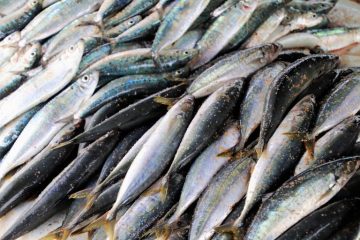
Climate change will have an adverse impact on trophic amplification in marine food webs
Climate-driven changes in ocean environmental conditions — ocean warming, deoxygenation and acidification — are projected to affect the physiological functions of marine organisms, their geographic distributions, biological life cycles and total biomass.
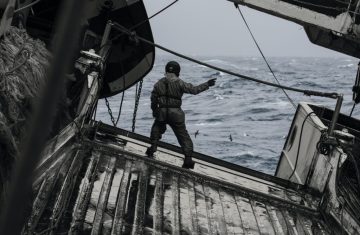
Fish buffered from recent marine heatwaves, showing there’s still time to act on climate change
Fish were surprisingly resilient to marine heatwaves before 2019, highlighting the need to keep seas from warming further, according to new research.
IOF professors head to United Nations Ocean Conference
Dr. William Cheung & Dr. Rashid Sumaila are off to Portugal for the United Nations Ocean Conference (UNOC), being held June 27 to July 1. Will participate in special side event: Fisheries Management as Climate Action, on June 26.
World Oceans Week 2022 – Dr. Nicola Smith
Dr. Nicola Smith is bringing together knowledge creators from diverse groups across Canada to uncover the true scale of greenhouse gas emissions created by Canada’s ocean industries, and ways to best offset these emissions.
New study reveals extent of labor abuse and illegal fishing risks among fishing fleets
A new modeling approach combines machine learning and human insights to map the regions and ports most at risk for illicit practices, like forced labor or illegal catch, and identifies opportunities for mitigating such risks.
Nearly half of countries’ shared fish stocks are on the move due to climate change, prompting dispute concerns
The study tracked the shifting ranges of 9,132 transboundary fish stocks, which account for 80 per cent of catch taken from the world’s EEZs, starting in 2006 and projecting to the year 2100.
Climate change creates ‘double jeopardy’ for fish-dependent countries, finds first study of its kind
A new study highlights the importance of collective action to boost resilience across all aquatic food systems to stave off the worst effects of climate change.
World Ocean Day – Dr. Gabriel Reygondeau
Asking countries to carry an equal share of the load may be tidy from a legislative perspective, but it doesn’t do much for biodiversity