
Aquaculture is shifting toward less sustainable species: new UBC study
Aquaculture relying on species that are less beneficial for food security, climate mitigation, and biodiversity

Opportunities exist for Canada’s mariculture industry despite climate change, UBC study says
In 2022, the industry contributed around $1.2 billion to the Canadian economy and employed 3,900 full-time individuals, many in remote coastal regions.

Marine heatwaves quietly rewire ocean food webs
Article originally posted on the Institute for the Oceans and Fisheries site. Marine heatwaves often make news when corals bleach or fish wash up dead. A new global study led by researchers at UBC and L’Institut Agro shows that bursts of extreme ocean heat are also reshaping the entire structure and function of marine food […]
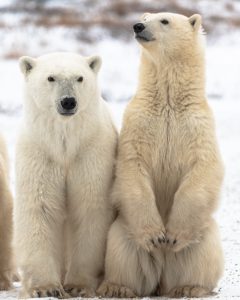
Increasing temperatures and salinity result in decreased ecosystem diversity, UBC study finds.
Ecosystems can be impacted and changed by a lot of different things, including human activities, stormwater runoff, contaminants, invasive species, and climate change

Low-income countries could lose 30% of nutrients like protein and omega-3 from seafood due to climate change
This could be reduced to a roughly 10% decline if the world were to meet the Paris Agreement targets of limiting global warming to 1.5 to 2 degrees Celsius – which recent reports have shown we’re not on track to achieve.
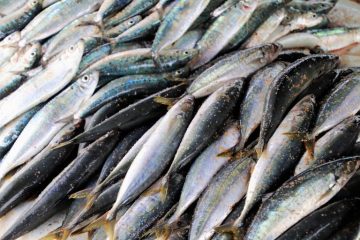
Climate change will have an adverse impact on trophic amplification in marine food webs
Climate-driven changes in ocean environmental conditions — ocean warming, deoxygenation and acidification — are projected to affect the physiological functions of marine organisms, their geographic distributions, biological life cycles and total biomass.
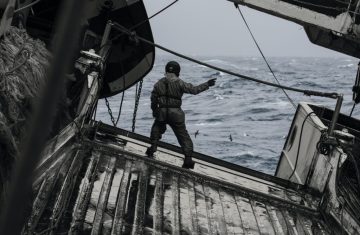
Fish buffered from recent marine heatwaves, showing there’s still time to act on climate change
Fish were surprisingly resilient to marine heatwaves before 2019, highlighting the need to keep seas from warming further, according to new research.
Nearly half of countries’ shared fish stocks are on the move due to climate change, prompting dispute concerns
The study tracked the shifting ranges of 9,132 transboundary fish stocks, which account for 80 per cent of catch taken from the world’s EEZs, starting in 2006 and projecting to the year 2100.
Massive “ensemble” climate modelling study includes work of multiple IOF researchers
The project used nine different computer models, created by different teams around the world, to illustrate with greater clarity and range how ocean life will be impacted by Earth’s warming climate.